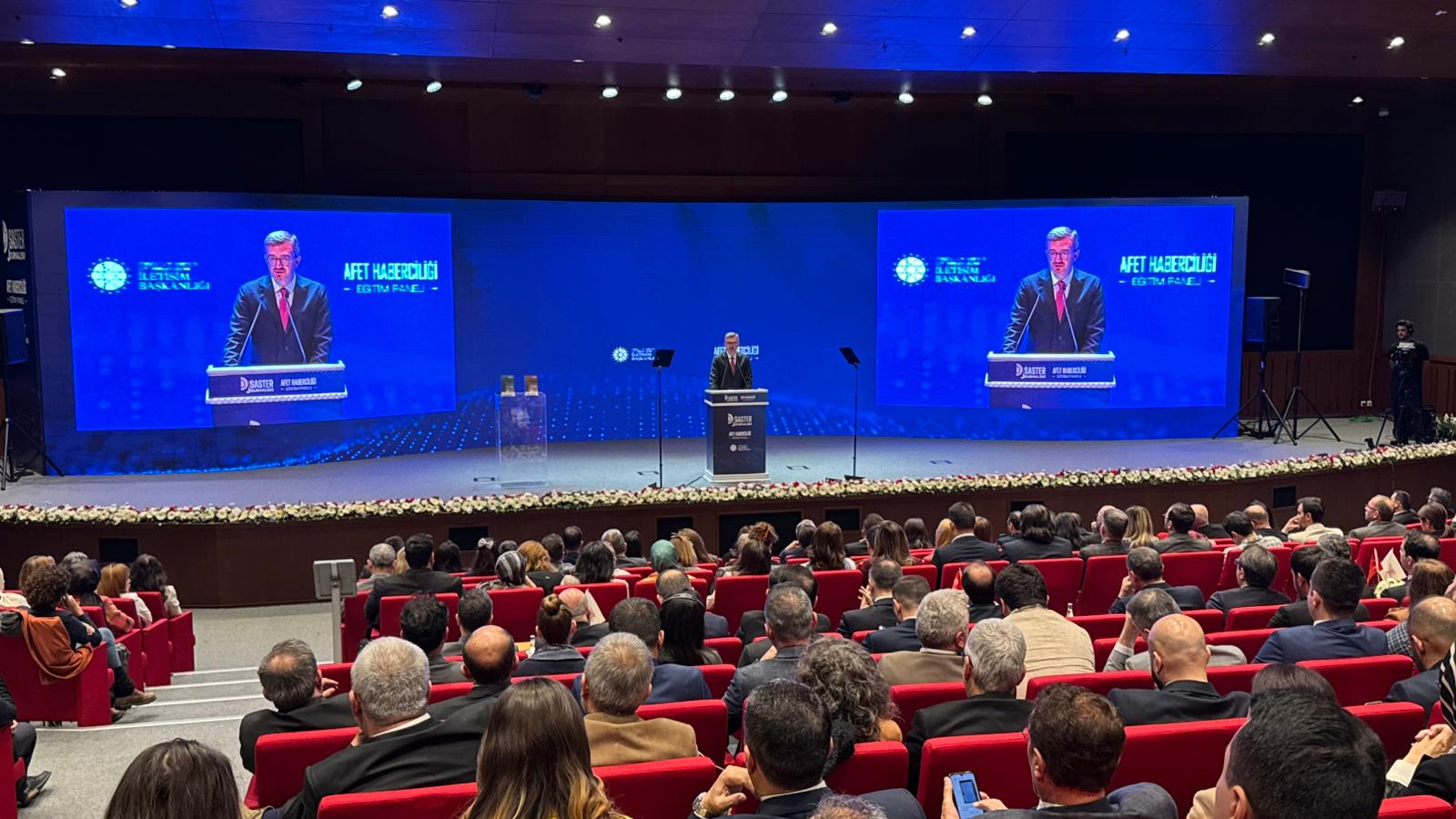
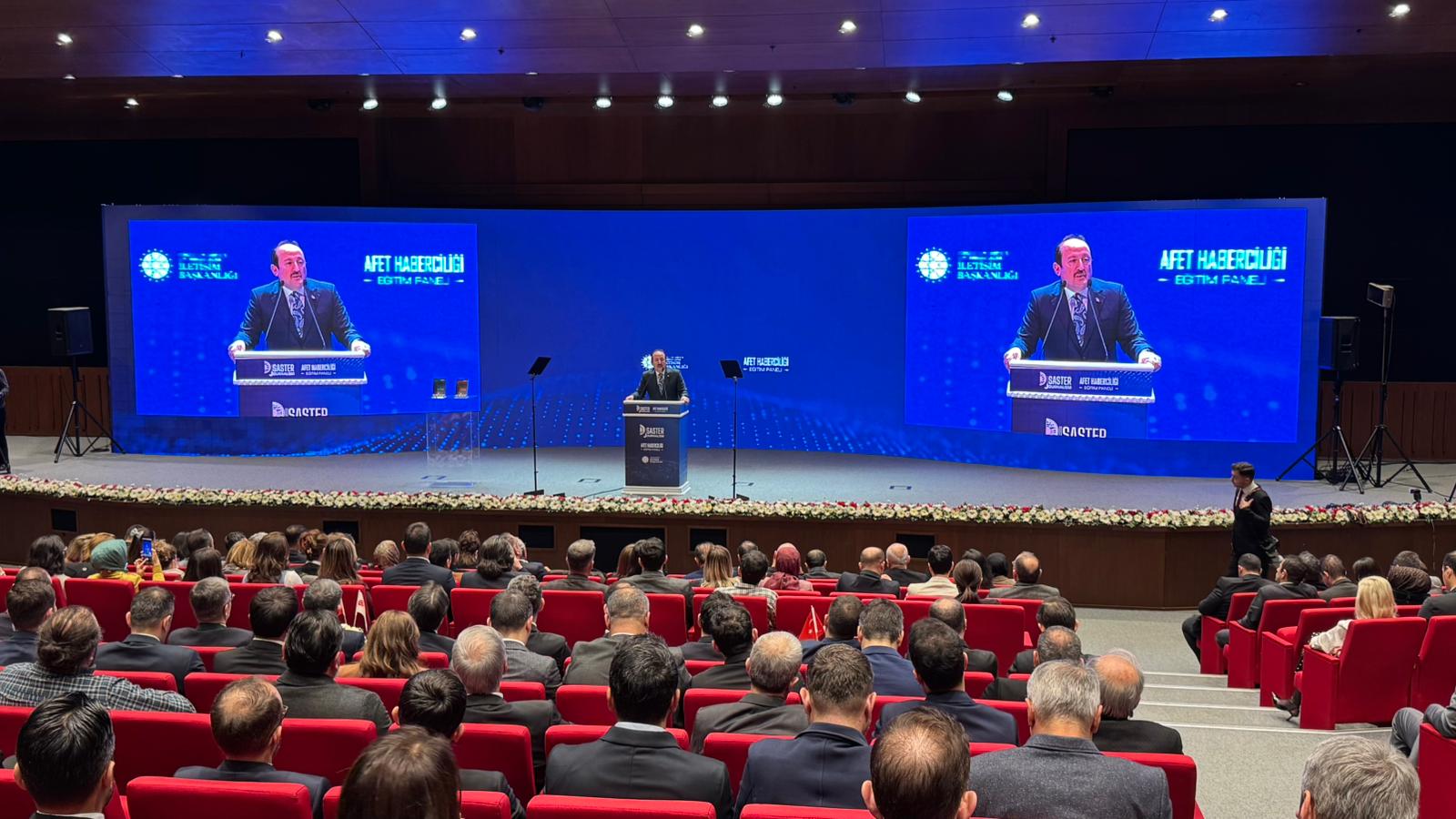
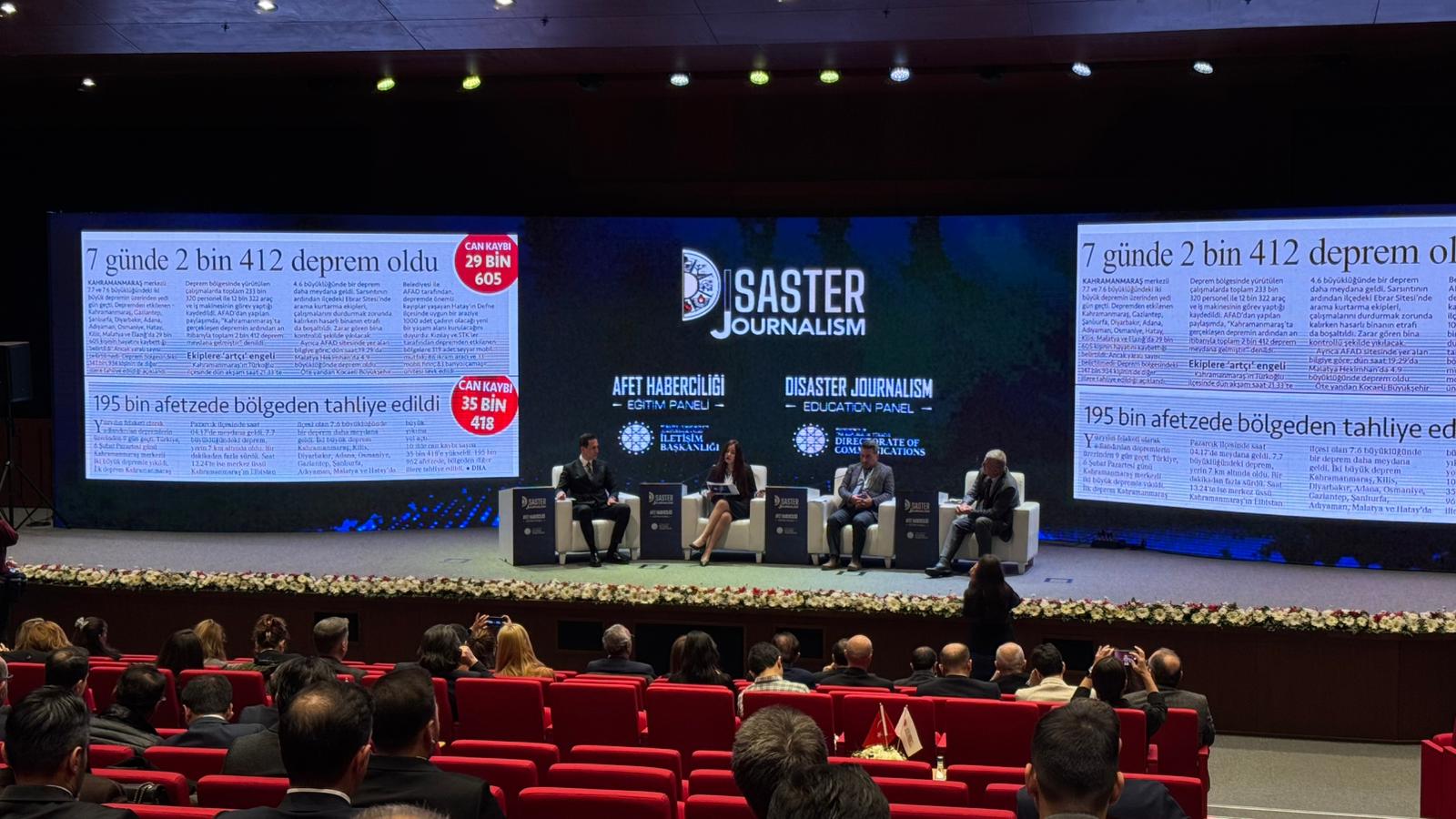
The DJ Project Learning Teaching Training Activity took place on 2 December in Ankara, bringing together key national and international stakeholders working in the field of disaster journalism. In his opening remarks, Director Burhanettin Duran thanked the project’s lead institution, Selçuk University Faculty of Communication, along with its partners: the Radio and Television Supreme Council (RTÜK), Konya Metropolitan Municipality Social Innovation Agency, the University of Primorska (Slovenia), Kyiv University (Ukraine), and the University of Vigo (Spain).
Director Duran emphasized the importance of collaboration among students, sector professionals, policymakers, and academics in an era where communication shapes all aspects of daily life. He highlighted that building a strong, ethical, and high-standard media ecosystem is essential for healthy communication practices.
He underscored the Directorate’s efforts in line with President Recep Tayyip Erdoğan’s “Century of Türkiye, Century of Communication” vision, noting that publications, educational videos, seminars, and events all contribute to strengthening both theoretical and practical dimensions of communication. In this context, he described the Disaster Journalism Training Panel as a significant step toward producing concrete outputs for the field.
Calling disaster journalism a sensitive area that directly influences social solidarity, public order, state–citizen communication, and life-safety, Director Duran stressed the challenge of managing information flows during emergencies. The intense public demand for information during disasters, paired with the prioritization of speed over verification, can lead to irreversible consequences, he warned.
Touching on the impact of rapid technological change, Duran noted that social media and digital innovations have reshaped global politics and communication. He underlined the increasing difficulty of distinguishing false information from verified content, a challenge heightened by developments in artificial intelligence. Disinformation and fabricated content, he said, can rapidly distort public perception, making strategic and integrated crisis communication frameworks indispensable.
Director Duran also spoke about the critical responsibilities of both journalists and the public, stressing that media literacy is more important than ever in a digital environment where anyone with a smartphone can become a content creator. He called for stronger awareness of verification mechanisms and AI-generated media.
Referring to the February 6 earthquakes—“the disaster of the century”—Duran recalled the profound national impact and expressed condolences for the more than 53,000 lives lost. He stated that the Directorate identified nearly 450 cases of disinformation in just five months following the earthquakes and worked closely with media institutions to ensure accurate public communication. Mobile press centers were established, press access to the disaster area was coordinated, and transparent information was provided to both national and international media.
He also highlighted ongoing efforts to support journalists and future media professionals. In 2024, the Directorate published Accurate Journalism and Media Ethics in multiple languages, produced video modules on crisis and war journalism, and organized the “We Hear You: Disaster and Crisis Journalism” symposium. As part of the current project, work continues on developing an internationally recognized disaster journalism curriculum. A Disaster Journalism book prepared in five languages will soon be shared with students, academics, and media professionals, offering practical guidance and expert recommendations.
Director Duran concluded his remarks by thanking everyone who contributed to the panel and to the wider project.
In a social media statement, he extended special thanks to AFAD President Ali Hamza Pehlivan, Selçuk University Faculty of Communication, and all national and international project partners for their support of the Disaster Journalism Training Panel organized by the Presidential Directorate of Communications.
.jpeg)
.jpeg)